Showing posts with label Civic Duty. Show all posts

Mar 8, 2021

Can You Drive Through a National Park without Paying the Fee?

*This is not legal advice, if a lawyer wants to spend their time pro bono to correct me, please do so*

I have significant experience being in and around National Parks, in almost all of those experiences I only ever passed through those federal properties. Over those years, I have also heard numerous reports of federal employees requiring others to pay the entrance fee of those National Parks even after people have disclosed their destination was not in the Park. My curiosity getting the better of me (I should be writing my dissertation, but I need to answer this before my brain will let it go), leads me to this path.

My legal basis for this assertion is with the structure of the Constitution and more specifically, the Court’s ruling in the Slaughterhouse Cases (1873), which in the very limited understanding of the Federal Privileges and Immunities, included a right to travel between the states. “The right to move with freedom, to choose his highway, and to be exempt from impositions, belongs to the citizen. He must have this power to move freely to perform his duties as a citizen.”(page 57) This is where I just might know enough law to get me into trouble, but let’s take this spontaneous assertion together. It is also worth recognizing the doctrine concerning the Right to Travel is not entirely clear. My contention is under my federal right to travel, I ought to be able to freely travel through the federal property without paying a fee. Mind you, there are collections of anti-government extremists known as Sovereign Citizens, who can be dangerous and are generally confused about the legitimacy of the American legal system. I am writing this in real-time, the ending TLDR conclusion may result in me being wrong. At no point am I advocating or arguing that one does not need to have a state-issued Driver’s License or current vehicle registration for this exercise.

The National Parks are governed by the National Parks Service, which is under the Department of the Interior (This link does a pretty good job of explaining the hierarchy of laws, rules, and regulations). They, like most executive branch agencies, are authorized by Congress to make rules and regulations which carry the force of law. Additionally, executive orders can “fine-tune” the laws passed by Congress to interpret the execution of such laws in a more specific (or not) manner. So the aspects of governance over National Parks are based on Federal statutory law (US Code), the Code of Federal Regulations (CFR), and Executive Orders. I want to confirm, if my legal understanding/analysis is correct, that under federal law, I can freely travel through National Parks, without having to pay a fee for a pass. This is specific, I cannot stop on the federal land to park or enjoy any of the sights, this is ONLY to pass through. If my findings confirm my suspicions, to use this knowledge to avoid paying entrance fees and park use is wholly unethical and one can and ought to be fined for not paying said fees if they use the National Park without paying the proper fees.

Let me start with the Executive Orders because this will be the easiest thing to address. Of the list provides by National Parks Service, none of the executive orders would apply to my inquiry.

Next up, the Federal Law, I predict it will provide for broad authorization, and the specifics will be addressed, defined, and enforced via the Code of Federal Regulations.

54 U.S. Code § 100101 - Promotion and regulation
(2) 1978 reaffirmation.—
Congress reaffirms, declares, and directs that the promotion and regulation of the various System units shall be consistent with and founded in the purpose established by subsection (a), to the common benefit of all the people of the United States. The authorization of activities shall be construed and the protection, management, and administration of the System units shall be conducted in light of the high public value and integrity of the System and shall not be exercised in derogation of the values and purposes for which the System units have been established, except as directly and specifically provided by Congress
.

In the link, one will see “System” and “System Units” are hyperlinked terms, which refers to “section 100501” for definition. This path leads us to “The System shall include any area of land and water administered by the Secretary, acting through the Director, for park, monument, historic, parkway, recreational, or other purposes.” So basically, this is the grand authorization by Congress to the Department of the Interior to do all the details. This is going way too smoothly so far, in your best Billy Mays voice, say to yourself “but wait there’s more!”


Now I am on to the fun (tedious) part! In case you did not know, the Code of Federal Regulations dwarf the US Code (federal statutes) by at least 20x, to be honest, no one actually knows. The truly fun part is this, not only does the Department of Interior get to write the rules, but they also get to enforce the rules, and interpret the rules. If you are thinking this may violate the separation of powers, then welcome to the debate concerning the Administrative State, it has been going within the Conservative legal movement for over 30 years, call it the best-kept secret in American government. At a more layperson level, this is known as the federal bureaucracy. Before I continue a rabbit trail on this broader issue, let me dive into the CFR and see what I can find.

The bulk of the relevant rules and regulations are found in Title 36 Chapter 1 Part 71.  In addition to the CFR, there are also the Management Policies of the National Parks System which references the Park Roads Standards. I might just be bragging about how much research I did for this... Let us begin with a look at the relevant CFR concerning the National Park entrance fees.

My prompt is only concerned with entering the National Park for the purpose of passing through. Of the three types of fees authorized in the CFR, only the Designated Entrance Fee Area (DEFA) would apply. No recreational activities or special recreation is to take place in this hypothetical. Therefore, the only potential legitimate fee would be the DEFA. As one continues reading the CFR, the designated areas are described and defined. My interest perks up at subsection 71.3. There is a helpful carveout, “(3) In no event shall any of the following, whether used singly or in any combination, be designated as facilities for which recreation use fees shall be charged: Drinking water, wayside exhibits, roads, overlook sites, visitors' centers, scenic drives, toilet facilities, picnic tables, and boat ramps.” To further solidify the position, at subsection 71.13, exemptions to the text above (71.1-71.12) include,

(b) No entrance fee shall be charged for travel by private noncommercial vehicle over any National Parkway, or any road or highway established as part of the National Federal-Aid System, which is commonly used by the public as a means of travel between two places, either or both of which are outside the Designated Entrance Fee Area; (c) No entrance fee shall be charged for travel by private noncommercial vehicle over any road or highway to any land in which such person has any property right if such land is within any Designated Entrance Fee Area.

Therefore, between 71.3 and 71.13, the CFR clearly states one can use the “roads” and “scenic drives” without having to pay the DEFA, particularly if you are traveling between two places outside of the National Park. To answer my question, “Can I travel through a National Park without paying the Entrance Fee?” Yes.

I also checked
 Part 7, for special instructions of the Parks I have experience with, Sequoia and Kings Canyon and recently Joshua Tree, no relevant information about my inquiry is in that section.


Oct 23, 2020

A Response to John Piper's Recent Article on the 2020 Election


A response to John Piper’s recent article.

I would like to preface this with the disclosure that I have not nor will I vote for President Trump, I have resigned to vote for third-party where possible until there are significant reforms to the two-party system. I also want to make it known I hold a great deal of reverence and respect for John Piper. It was after the reading of Desiring God that a thirst for deeper theology and understanding based in scripture that I mark my faith journey in adulthood. I am forever grateful for the presentation of God’s sovereignty.

The fun part: Yes, this is a criticism, it is one of many, hopefully this can be edifying to my Christian friends and associates who are concerned about how they ought to or not cast their vote. I think Piper’s deliberations over the choice many are likely still facing, is reflective of the broader concerns of the two-party system, but it is a little late for us to look to the remedies for this coming election. To this degree, H.L. Menken frames our present situation appropriately, “Democracy is the theory that the common people know what they want, and deserve to get it good and hard.” We have made this proverbial bed.

Piper is concerned with the role individual personality traits and characteristics play in leading a nation. His scriptural support is well-founded in a biblical context, albeit not necessarily for a representative system of government. The Books of Kings, Chronicles, and Samuel provide ample examples of flawed leaders leading their nations to ruin or repentance. However, in all those examples, the ruler is a King. This structural difference in the system of governance is significant. Under a King, the people are in the direct path of their leader, and if we are considering most of European history, that right was through a divine authoritative claim. There was no concept of separated powers or representative government, rather the opposite. The Peace of Westphalia in 1648 is significantly remembered for among other things establishing the principle of “cuius regio, eius religio” (Whose realm, his religion), wherein the religion of the people was dependent upon that of the sitting monarch. We are far from such systems of government but not without other concerns. I am immensely grateful though that the faith of my chief executive does not have any bearing on my own faith. It is, for this reason, I think it valid to be less concerned with clear, overt character flaws in a chief executive.

The primary argument of Piper is that we ought to weigh more heavily on the individual character of those seeking to lead our nation. Again, this is wholly reasonable if power is held in the hands of a single person, but need we return to School House Rock to remind us of the bicameral legislature as the primary body to represent the People and the States? The bodies who draft legislation and ultimately make the law of the land. The President does not single-handedly dictate policy. When Presidents have done so, they have been checked. Much of President Obama’s legacy is facing such fate, which should be the expected outcome when one leads through a “pen and phone.” I would happily argue we cast an outsized focus on the occupant of the White House in an unhealthy unrepresentative manner which has hurt our ability to communicate with our neighbors about policy.

Our system of government was designed, knowing full well the dangers of human nature. In what is one of the most important essays written by James Madison explaining the uniqueness of the United States as a constitutional republic, he recognizes the challenges of competing interests, particularly when they become primarily motivated by animus against the opposition. In Federalist 10, Madison notes, “It is in vain to say that enlightened statesmen will be able to adjust these clashing interests, and render them all subservient to the public good. Enlightened statesmen will not always be at the helm.” The government of the United States of America is bigger than any single person, we ought to remember this. A person does lead an administration, which is far more consequential in any measurable analysis of a chief executive.

Hence, we Christians find ourselves conflicted between our citizenship in heaven as members of the royal priesthood against our earthly citizenship in these United States of America. How we chose to vote should not be a simple binary option, it was not designed in this way. It should not be something we visit only in the weeks prior to an annual election, it was not designed for that either. If the representative government is to work, we need to be aware and engaged throughout the year, in such a way that the government which theoretically operates on the consent of the governed, has informed consent.

"I know no safe depositary of the ultimate powers of the society but the people themselves; and if we think them not enlightened enough to exercise their control with a wholesome discretion, the remedy is not to take it from them, but to inform their discretion by education. This is the true corrective of abuses of constitutional power." -Thomas Jefferson to William C. Jarvis, 1820.

"If a nation expects to be ignorant and free in a state of civilization, it expects what never was and never will be." -Thomas Jefferson to Charles Yancey, 1816

“A popular Government, without popular information, or the means of acquiring it, is but a Prologue to a Farce or a Tragedy; or, perhaps both. Knowledge will forever govern ignorance: And a people who mean to be their own Governors, must arm themselves with the power which knowledge gives.” James Madison to W. T. Barry, 1822


Feb 2, 2017

The Failure of Democracy?


As news continually updates us with more impassioned protests, screaming pundits, and overall mass divisiveness across the nation, if we can backup a bit perhaps these thoughts might offer an explanation of what has been happening. Let us see if we can accurately describe the current state of affairs. The “United States had become a nation polarized by specific regional identities… The Democrats... emphasized the right of individual states to create and enforce laws… The divide in the parties can be seen in the state’s political newspapers… Debates about the bill erupted throughout the nation. Despite public opposition, Douglass, “utilizing all his powers of argument, his prestige, and his mastery of parliamentary tactics [forced] the bill through Congress by the narrowest of margins.” Yes, I admit there was a certain level of cherry picking used to make the quotes fit, but I think you get the point. Please do not think I am particularly targeting the Democratic party of today as a parallel of the pro-slavery Democrat party of the 19th century. That discussion would distract from the issue this hopes to address. That is, the level of political division in this nation is not uncharted territory and perhaps if we take a step back there might be some perspective to gain on the causes.
I do not think it is too much to compare the current political climate today to that leading up to the passage of the Kansas-Nebraska act. Namely, there are bouts of unrest across the nation over hotly divided issues, which at large might be summarized as Identity Politics which more or less follow clear political partisanship divides. Sentiments were strong and divided about who gets to govern whom, and the federal system at large was in question. Insert the overused quip about those who do not remember history here. The nice thing about remembering history is the prospective we have, especially when there is a plethora of recorded writings and plenty of time to separate us from the passions of the time. We can have a clear understanding of the sentiments at the time while being isolated enough that the issue is less personal in nature.
Conventional lectures on the road to the Civil War highlight the competing powers between the North and the South that started as soon as independence was gained and continued until the most costly war in our history “settled” it. Consider this perspective, if we were to take a proportional comparison of the Civil War to our current population, 6.5 million people would have lost their lives. The typical lecture might highlight the expansion of the territory in the US and the designation of slave or free as the overall cause. In that approach the point of no return might be the Compromise of 1850, the Dredd Scott decision, or Lincoln's House Divided speech. It might highlight the shift in understanding of the institution of slavery itself, from the Peculiar Institution which Thomas Jefferson thought it to be, to the Positive Good by the late 1830’s. This shift in philosophy fomented the institution that made it worth defending to enough people that it eventually lead to war.
Ultimately, I point to the breakdown of the institutions put in place that prevented our nation from being a direct democracy. These institutions are described in detail in the Federalist, those would be; separation of powers, extended republic, bicameral legislature, and the electoral college to name a few. Summed up, the Federalist system as defined by the Founders and illustrated in the Constitution. There are volumes of writings extolling the virtues and understandings of these structures and I am but a pup in the presence of academic giants. Unfortunately, unless one was home-schooled, there is a very good chance the Federalist or a serious consideration of the Founding documents were not considered unless one took a proactive posture to understand the Founding.
The Separation of Powers essential purpose was to ensure each branch of government would conflict with one another, competing for greater power in their respective branch. In doing so, the three way competition would result in each branch being limited to their own respective range of authority. Imagine giving three children a pie to share in which two children get to make the slices and the third gets to choose which piece to take. It would be in the self interest of the two slice makers to attempt the most even division, in order to maximize their self interest. The 20th century saw a shift in jurisprudence which has furiously sought to judge the law not from the bindings of the text of the statutes, but from the greater wisdom of the judges to accomplish a sort of “justice” not found in the text of the laws under question. For these many decades the Legislature, who has the explicit and exclusive right to make law, has seen fit to abdicate that power in the most controversial issues, because the lifetime appointment of the jurists allow it. Why would a congressperson risk upsetting their constituents if a judge will accomplish the same goal? There are many issues with the Legislature not doing their duty, this is one of the grandest abdications.
The Extended Republic was the notion that the nation would be so diverse that no majority faction (party) would be able to successfully quell the minority. This model essentially spoke against the two-party system. While it is true that within a couple years of the Constitution’s ratification, the very authors separated into parties, for the first hundred years of American politics, third parties held a legitimate place of influence at the federal level. It was not until the 20th century that parties made rules in the House and Senate that continued to grow to the point that third parties are realistically a wasted vote in national elections. One of the most caustic aspects how parties fulfil the right definition of “factions” is how they control committee assignments and maintain a hierarchy of representatives. The best suited representatives are not put in committees for their fitness but instead because they have pleased the party powers to be rewarded with the places of greater influence.
The Bicameral Legislature is the most deliberate sign that direct democracy is not a good thing. The balance of power within the legislature itself, between the House and Senate clearly illustrate the Founders concern of the passions of the people (or mob) should not rule. This was the solution to learned men who considered how the best form of government is made through a social contract while simultaneously and deliberately creating space to slow the process of governance. A majority faction can easily stir a group of people to get any law passed regardless of Constitutionality. The bicameral legislature soothed those passions. Keep in mind, in the original form, Senators were selected by state legislatures. I think one of the most grievous amendments to the nation has been the direct election of senators in the 17th Amendment. This has lead to people so focused on what the Federal government does and an inverse attention to what the state does. The legitimate slowing of the deliberative republican process was the best answer to the diverse regions of the nation. As the nation expanded, the diversity of regions also expanded, hence extending the republic further, that might ensure even greater agreement in the federal laws passed. In the same way, the Electoral College accomplished that goal for the presidency. The legitimacy and need of the Electoral College has been in question a handful of times in the recent decades but in reality it only confirmed that we are a federated republic not a pure democracy. We cannot be a nation of coastal urban elites, or rural lords, but a consensus of the regions.
This is far from a complete analysis of the present political climate, but hopefully these suggestions might add context to your considerations of what this nation was founded to be and what it should become. There are numerous scholars who recognize these things but also recognize the social contract made at the Founding was made to an entirely different society, hence we are being constrained by the rules of the dead. That is a consideration that is worthy to be made. I tend to side, that before we replace the rules of the dead, perhaps we should understand what they made, the issues they addressed, and if we could do better.

Sep 11, 2016

15 Years Ago


One of the difficult things about being joyfully busy is the struggle to have some introspective time of reflection. Today marks 15 years ago when, for a good portion of my generation, our experience in the world changed. Ten years ago I reflected upon the new world under the lens of an active duty soldier stationed overseas. In those conditions it was unmistakeable to myself and those around me, that our lives were certainly different. Tonight I reflect upon how that day of infamy has rippled through this life. Much has happened between these two points of reflection. Although it took longer than I expected, I finally did get to go to war as a soldier. Then as life would have it and providence continued, I would go back to war.
I recall the night we received news about the death of Bin Laden. There was buzz on the classified chat channels that something big happened but we had no idea. My spidey senses convinced the cafeteria staff to change the TV channel to news and I got to witness with everyone else that night the President’s address. It meant something different sitting less than two miles from where that fateful day was planned. Killing the instigator of this new reality did not return us to the world we knew before. That has long since past and cannot be recovered, there is only moving forward.
I have been considering what was so uniquely remarkable about that day. It was not the first time we had been attacked by overseas terrorists in New York. It was not the first time a building was attacked on our soil in our memory. It was far from the first time we had been attacked by people of Islamist ideology. It was the largest coordinated attack with the most devastating results in our history. I have not talked to someone who lived through the attack on Pearl Harbor to describe what the effect was. That was a deliberate act of war by a uniformed nation. This was a cowardly hijacking using civilian aircraft to destroy civilian and military targets.
We experienced this. Many of us watched on live television as the second plane struck the North Tower. Even more of us watched as the two towers collapsed. For weeks those images were replayed countless times on television. We rallied around the flag proclaiming in earnest, “We Will Not Forget!” We invaded Afghanistan and on the coattails of “Never Again” we invaded Iraq. We had to be proactive about this threat we mistakenly thought to be malignant. We struck back and exerted the full force of the United States of America on anyone who dared to threaten us again. Such force had not been displayed in the world’s view since we landed on the beaches of Normandy and dropped the world’s most terrible weapons many decades ago.
15 years of war later, the resolve we began that had such a powerful undertaking has been… strained to say the least. We will have to come to terms that Afghanistan will incorporate the Taliban in their government if they are to ever stop fighting. We have been almost idly sat and watched as ISIS has ripped through Iraq and Syria proudly displaying to the world the fruit of their ideology. For many of us we must be cautious where we utter “radical Islamic terror” so as to not offend people who cannot tell the difference between religious ideologies. We have watched domestic turmoil divide us by political party, race, education, economic status, religion, even patriotism. We find ourselves in a nation full of people longing for heaven on earth who lash out at others in numerous fashions because it is not. We cannot even agree on our own identity let alone who we are as a nation. Who should we be? We used to be a nation that soughtto form a more perfect union, establish justice, insure domestic tranquility, provide for the common defense, promote the general welfare, and secure the blessings of liberty to ourselves and our posterity”. But those are words from old white men who were unenlightened and guilty of some of the most grievous sins of the 21st century in their antiquated 18th century ways and thoughts. Or at least that is how the Founding documents are often treated if given some mind at all.  
I cannot help but think back to littlun Percival Wemys Madison. At the beginning of the story he knew his name and address. Repeating such were his refuge and comfort in considerably traumatic times, by the conclusion of the book, he forgot everything, even his own name. This is not to say our reactions to the attack were acts of innocence and our disenfranchisement of those ventures has been our maturing. We certainly started those wars with the passionate fervor of justice. The hope was that such acts were to fulfill the duty of our government to protect ourselves. Even this understanding is under considerable scrutiny.  I fear if we do not remember who we were, first as people, then as a nation, what was lost those 15 years ago will only be a shadow of forgotten memories.

Jul 18, 2016

Adventures in Security: 0 Days Without an Incident


My streak is over. I have been working security at a nearby ritzy venue for almost a year. Over the course of that time, I have somewhat proudly noted that every real fight or altercation we have encountered I have been absent. I would insinuate my particular demeanor was more comforting and successful to de-escalate situations instead of allowing disagreements to turn to fights. It is worth mentioning the pedigree of the venue is far from the typical dive bar. We are not some ragtag tight polo shirt wearing element. We are in suits minus the tie, if you can peg a man by his dress then we are certainly a professional team. A rough approximation would say there are only events which require our intervention once a month. A typical night is filled with checking IDs, assisting bussers with broken glasses, and clearing the venue at closing time. As with most security, our primary purpose is fulfilled in our mere presence. I should probably note that of the three nights a week which our security team is present, I usually only work one of those.
Although I have an older brother, throughout our childhood we never really fought. Dad ensured no such hijinks would be permitted and it worked. We were never taught to back down from any hostile acts but nor were we taught to go looking for trouble. Because my investigation in Complementarian theology followed my service in the Army, I am not inclined to think the “protective desire” was something from my theological convictions. I do not know. We can chalk it up as a social construct which much of my generation has embraced.
Anyways, Saturday night was a learning experience. Not only did I get to assist with an escort following an altercation, as that one was settling I was the lead guard who broke up another fight. Adrenaline flowing in all, the true question of fight or flight was answered in the heat of the moment. It should be noted, that we do not fight patrons… well, I do not fight patrons. When two people are not playing nice with each other, the best resolution is to separate them. It is not worth the time or effort to figure out who was in the right or wrong until the altercation is ceased. We ascertain the details and responsibilities of the event following a successful ceasing of the fight itself. My job is to get between two people fighting and separate them. Not only was that night a first, which I finally got to be the first person on scene, it was the first time I was really punched in the face. I am quite certain had it not been for a broken nose my junior year of highschool, I would certainly have bled after that strike, thanks for that Dave :D.
Once the sting of the facial numbness streaked across my face and the fight was stopped I almost instantly thought about a quote from Muhammad Ali a friend has often quoted to me. “Everyone has a plan until they get punched in the face.” Of course, my friend has always used that phrase more for its metaphorical purpose, but this weekend it was rather literal. Until one is presented with an actual situation where tempers are flaring, danger and fear were present, we can only hope to do the right thing given sufficient mental preparation and/or physical training. Due to my lack of direct experience, I have not had much opportunity to hone my hand-to-hand combat skills. I can generally use my size and strength enough to mitigate my lack of technique, but even then, until this weekend all such mental simulations remained only in theory.
Now I know. I can take a real hit to the face. Aside from the crash against my skull, and slight numbness, I did not falter. I continued pulling the patrons off of one another and once the two were separated the altercation was finished. In the aftermath I was reminded of the temperament of my colleagues. The would undoubtedly disagree with my findings in Babysitting and Bouncing.
I was also able to take a few minutes to reflect upon the numerous types of security I have been involved. From time as a soldier, to a summer camp security guard, to a bouncer. Each capacity has honed the desire to protect into an ability to do so. I am also reminded of the repeated instruction in Army Combatives training. Our instructors repeatedly stated “We are only teaching you just enough to get your ___ beat.” It was a rather simple block of instruction but they were certain that we did not act too empowered by our basic combative skills test. If I recall right, on one of my sparring opportunities I dived head-first into a guillotine choke hold. Oh the joys of youth and vigor.
I returned from Hume on Friday, after a two-week visit. I truly love Hume and the people up there. This summer is far different from how I imagined it even two months before. It has required a type of waiting that has not been required since my exit from the Army. I had no idea what I would be doing this summer as it began and as the weeks passed hopes were dashed and opportunities unveiled. These revelations remind and reassure me that I am supposed to be exactly where I am. God has been guiding these steps far longer than I have been aware enough to recognize their destination. My adventures for this summer are far from over. Although the desired accomplishments are somewhat lacking, the thankfulness for being about to return to Hume, more than statisfy.

Jul 1, 2016

Gunpocalypse 2016: Results Are Not Good

We have the final word on Gunpocalypse” 2016. From the original post the list expanded and contracted. 11 Bills made it through the Assembly and Senate to Governor Brown’s desk. He signed 6 into law and vetoed 5. This will try to address what will happen and how one might comply with these onerous laws. With the passage of these laws California easily jumps to the lead as being the most restrictive state in the nation concerning gun laws. It might say something that the official website of the press release of the list of signed and vetoed bills was crashed for some time. If you want a better explanation of each bill, see the original post.

The New Laws
  1. SB 880 Firearms: assault weapons.
    1. The bittersweet relationship the California gun owner had with the “bullet button” is coming to a close. The legislature sought to ban semiautomatic sporting rifles and capitalism responded with ingenuity only a few years later. The previous fix was a setup that required one to open the upper receiver to load cartridges into an internal fixed magazine. Much in the same way one would load a bolt-action Remington 700.
    2. Fear not, innovators have already forecasted the lack of restraint the leadership in California would exercise and created this feature which complies with the new law’s text.
    3. It might be worth noting that universal firearm registration did not go into effect until January 1, 2014. Any home-build long gun and long gun not voluntarily registered prior to 2014, California has no official record of its existence. This law will be difficult to enforce.
  2. AB-1135 Firearms: assault weapons.
    1. This law redefines “assault weapons” from “a semiautomatic centerfire rifle” to “semiautomatic rifle” with the evil features. Semiautomatic rimfire rifles are now included in the list of banned rifles.
  3. AB-156 Ammunition.
    1. Following the reappropriation of taxes and fees gun owners pay for background checks and licenses, there are now new fees which California’s legal gun owners must pay to support the enforcement of illegal firearms.
    2. I am less concerned about this law. I am confident like every other law banning interstate ammo sales since 2009, this too will be struck down in federal court because it seeks to control a power explicitly held by the Federal Government, interstate commerce. If such a law were to be permitted that would be a huge power grab away from the federal government, good luck.
  4. SB 1446  Firearms: magazine capacity.
    1. This law prohibits possession of any magazine over 10 round capacity. Because there was already a law that prohibited the sale, manufacture, and importation of such magazines since 2002, this specifically targeted the “pre-ban” standard capacity magazines.
    2. This law will be difficult to enforce.
  5. AB-1511 Firearms: lending.
    1. Firearm lending is still legal, but limited to immediate family members who must also have a Firearm Safety Certificate one can acquire after passing a test and paying $25. The certificate is valid for 5 years.
    2. Let us hope between this law and the still present 10-day waiting period does not have grave results for people in immediate harm.
  6. AB 1695 Firearms: notice to purchasers: false reports of stolen firearms.
    1. This bill makes false lost or stolen firearm reports a misdemeanor which includes a stripping of gun ownership for 10 years.
Where Do Gun Owners Go From Here?
As I mentioned, some of these laws have a legitimate chance to be struck down in the courts. If a judge places an injunction on the measure then it might not be done. 
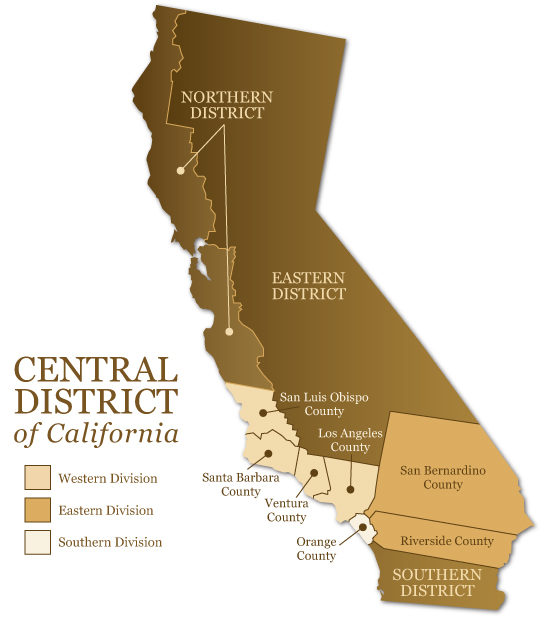
Help us Eastern and Northern Districts, you are our only hope.
 The biggest question which I think the Attorney General will have to clarify on the FAQs page, will the newly Registered Assault Weapons (RAWs) be classified differently than the original RAWs from the early 1990’s. If so those who comply with the new laws will be able to have semi-automatic centerfire rifles with all the fun accessories. The manner by which I read the text, says yes, I’m not a lawyer. It should be worth noting no RAW is transferable to any person in the state. If an owner of a RAW wishes to pass it on to family, it cannot be owned in California before the owner dies.
This is the less popular part of the message especially to the frustrated gun owners. I understand the frustration. I recognize the sabre rattling. I know the impossible nature of enforcing the most onerous laws. I also recognize the estimates of non-compliance from the first round of registration in 1990, when AR-pattern rifles were not yet mainstream. I also recognize the philosophical factors concerning unjust laws, most especially in American history MLK’s Letter from Birmingham Jail.
Despite these frustrations, if California gun owners want to proclaim that we are indeed law-abiding, then we must comply. I recognize the rough impossibility of enforcement for those who have not featured their firearms on social media. If we wish to abandon that description then we are in a much graver place as a state and nation. Even stirring the masses to “shall not be infringed” fails a history test. Per the 10th Amendment, and due to the present jurisprudence, the State has every right to ban these commonly owned firearms. I deeply disagree with the state of affairs, but I think it a much better solution to move to a less restrictive state than to knowingly violate the law. The Federalist experiment which allows for these many petri dishes known as state governments looks to be failing. I am reminded of this scene from The Patriot.

“And my principals”? I am fearful of any serious talk of rebellion or revolution. I have been to war, twice. One ought not threaten such things lightly. We glorify war in entertainment and speech. I am proud of my honorable service in the recent wars. I am also confident in peaceful resolutions. The way things look, we might be due for a Convention of the States.

Bills Still at the Legislature
  1. AB-2510 Firearms: license to carry concealed: uniform license.
  2. AB-2459 Firearms dealers: conduct of business.
  3. SB-1006 Firearm Violence Research Center
  4. SB 1407 Firearms: identifying information.